
Roof leak: repair or replace?
A leak is a symptom. The stain on your ceiling is where the water showed up, not always where it got in. We find the cause first, then tell you whether a repair will hold or the roof is due.
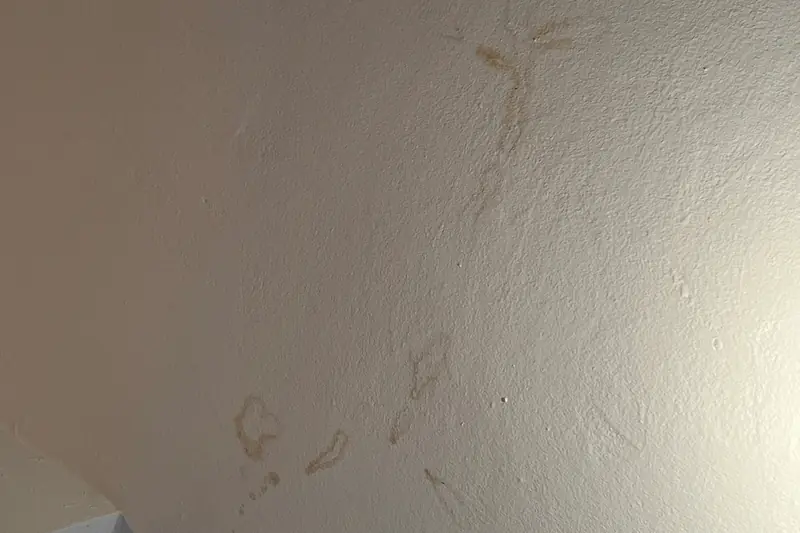
If water is coming in today
- Take photos and notes — when it leaks, how hard it was raining, and which way the wind was blowing. That’s often the fastest clue to the cause.
- Check the attic with a flashlight — look for wet wood, damp insulation or a drip. Stay on the framing and off the drywall.
- Stay off the roof — a wet roof is slippery, and walking on old shingles can make the damage worse.
Need a tarp?
When the schedule allows, we tarp an active leak to keep water out until it can be repaired. Tarping is billed at our repair rate.
(925) 381-9162Call, or text us photos.
Water rarely comes in where the stain is
It runs along the boards and rafters before it drips. These are the causes we find most often.
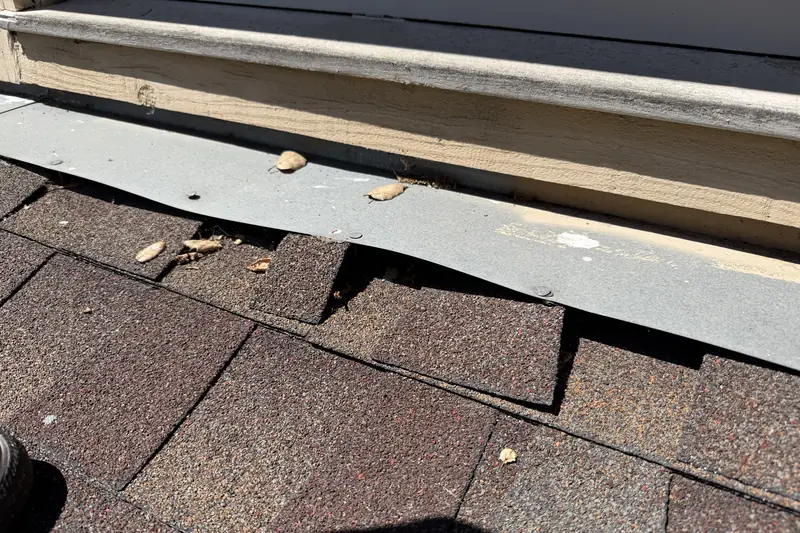
Where the roof meets a wall
Small metal pieces called step flashing are tucked under each row of shingles along the wall. When they rust or were reused from an old roof, water gets behind the siding.
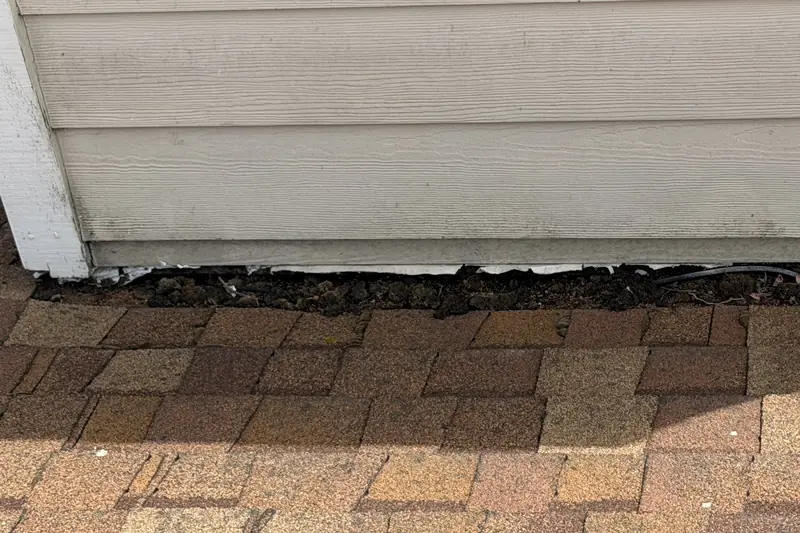
Around chimneys
The metal sealing the chimney to the roof cracks or pulls away. Behind wide chimneys, water also pools if there’s no cricket, a small peaked ridge that sends water around the chimney.
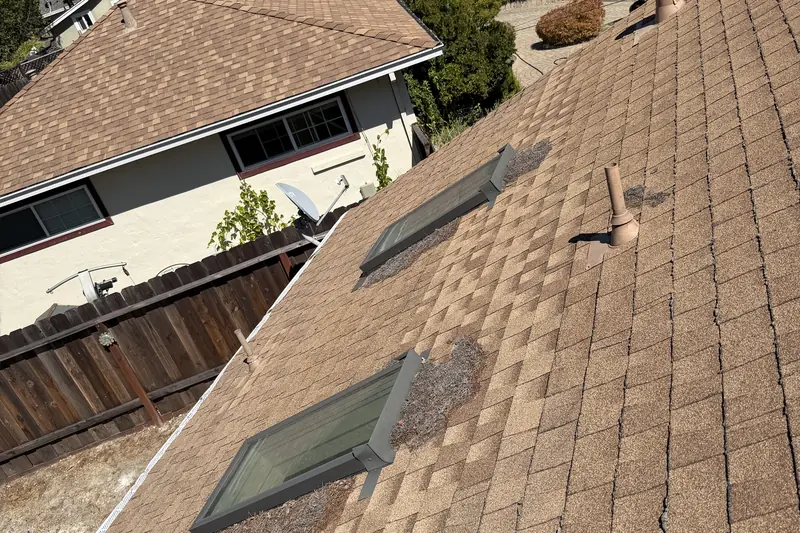
Skylights
The seal is usually the metal flashing around the frame, not the glass. We reflash skylights. New skylights go in during a reroof.
Valleys
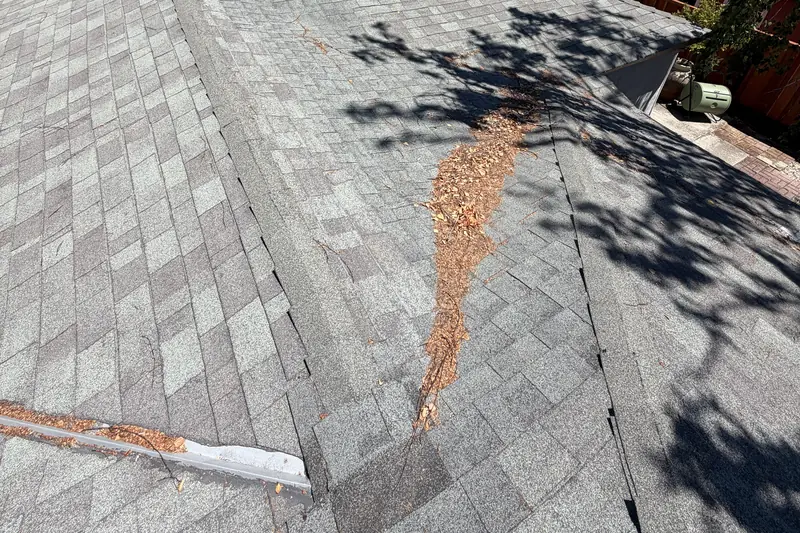
Where two slopes meet, all their water runs through one channel. On an older roof, that’s often the first place to wear through.
Worn or missing shingles
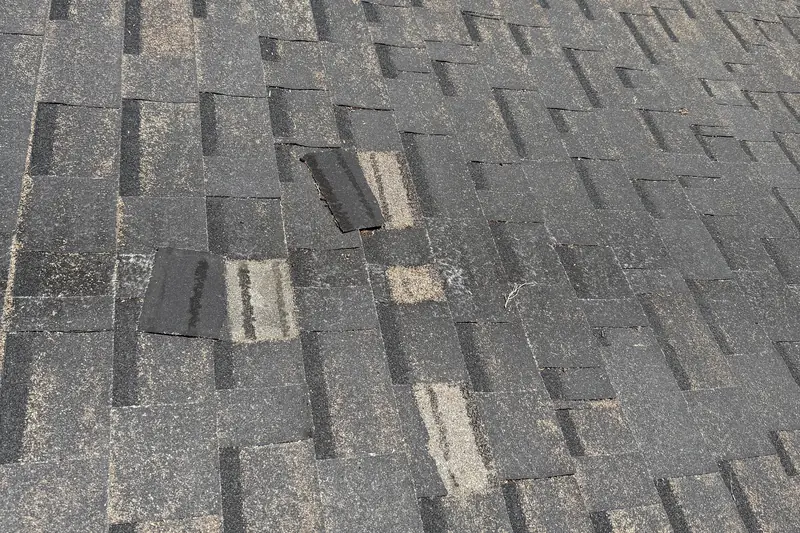
Cracked, curled or blown-off shingles leave the layer beneath exposed. One or two after wind can be replaced. Wear across the roof can’t.
Nail pops
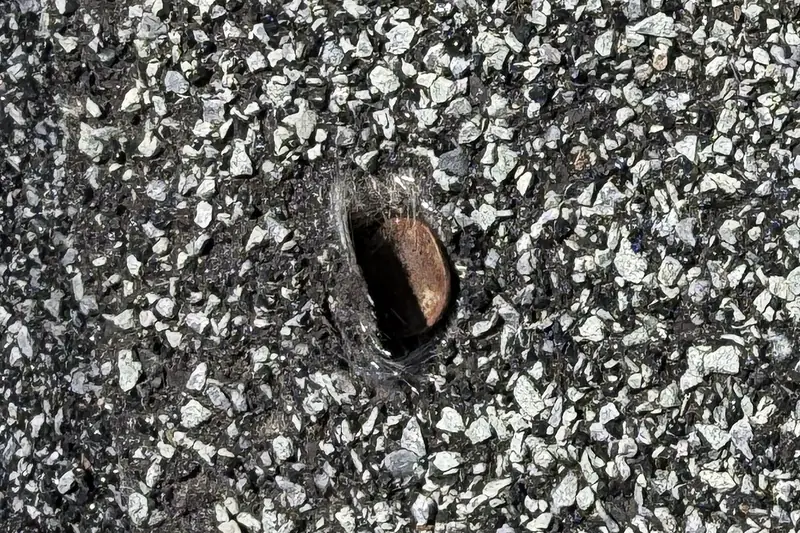
Years of heat and cooling push nails back up through the shingle above them, leaving a small hole. Each one is a pinhole leak.
Two things that look like a leak but aren’t
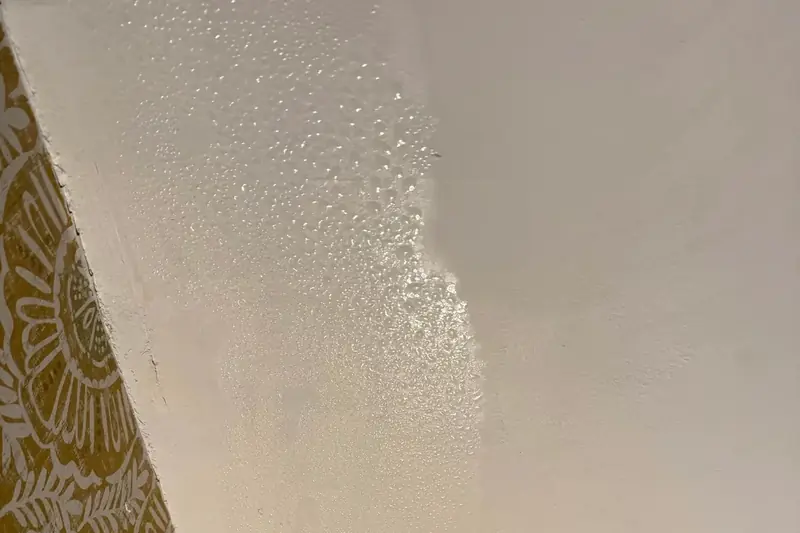
- Attic condensation — warm, damp air from the house hits cold roof boards and turns to water, like a cold glass on a hot day. It shows up as frost or drips on dry days. The fix is balanced attic ventilation, which we add during a reroof.
- HVAC condensation — an air conditioner or duct in the attic can drip from its drain line. If that’s what we find, we’ll tell you.
If water shows up when it hasn’t rained, it’s probably one of these. Tell us that when you call. It changes where we look first.
What happens at a leak visit
- You tell us the history — where water shows up, in what kind of rain, and what’s been tried.
- We look inside and on top — the ceiling, the attic if we can reach it, then the roof above.
- We show you the cause — photos of what we found.
- You get our recommendation — repair, replace or wait, and what each one fixes.
The diagnostic fee is waived if you book any work with us, whether that’s a repair or a replacement.
On the repair we make. It covers the area we fixed, not the rest of an aging roof.
When a repair holds, and when it won’t
- Shingle roofs under about 20 years — flashing, a skylight, a few shingles or a nail pop can usually be fixed.
- Shingle roofs over about 20 years — we can still fix flashing. But lifting old shingles breaks the seal that holds them down, and aged shingles turn brittle and crack. Once that’s happening, a repair causes the damage it’s trying to fix.
- Signs of age across the roof — cracked shingles and bare fiberglass showing through mean the roof is due. Patching only moves the leak.
Patched before, and it came back?
Tell us what was done and when. The last repair is evidence, and it often points straight at the real cause. If the roof is past patching, we’ll say so and show you why.
Leaks on low-slope sections
Flat sections over garages, porches and additions don’t shed water the way sloped roofs do, so they leak in different places.
- Seams — where two sheets of roofing meet. Older seams dry out and separate.
- Blistered or cracked surface — heat makes the top layer bubble and crack, which lets water into the layers below.
- Parapet walls — the short walls around the edge of a flat roof. The flashing where roof meets wall is a common entry point.

Many leaks wait for the first big storm
After a dry summer, small problems often don’t show until the first heavy rain. If your roof is getting older or leaked last year, a check in early fall gives you time to fix it before the storms.
Not sure it’s worth a visit?
Text us photos of the stain and the roof above it at (925) 381-9162, and we’ll take a first look.
“[Van] and his team were amazing. They completed all the repairs on my roof and have exceptional customer service. The rates were fair and we [were] so pleased with our final results.”
Words in brackets replace a name or fix a typo.
 Read on Yelp
 “After it was discovered that the initial repair only fixed part of our leak, they came back at no additional cost to fix it completely.”
Read on Yelp Questions about leaks
Can you find out why my roof is leaking?
Yes. Leaks almost always start at the metal: the flashing at a wall, chimney or skylight, or a cracked pipe boot. A leak diagnostic visit is $350, waived if you book any work with us. For a first look, text us photos at (925) 381-9162.
Will sealant fix my leak?
On a roof that’s showing fiberglass, sealant around a leak buys a season at best. We’ll tell you honestly whether a repair is worth your money.
What does a leak repair cost?
The diagnostic visit is $350, waived if you book any work with us. Repairs are $1,500 per laborer per day with no deposit, and carry a 3-year warranty on the area we fixed.